Redefining how Deaf and hearing professionals communicate in real time.
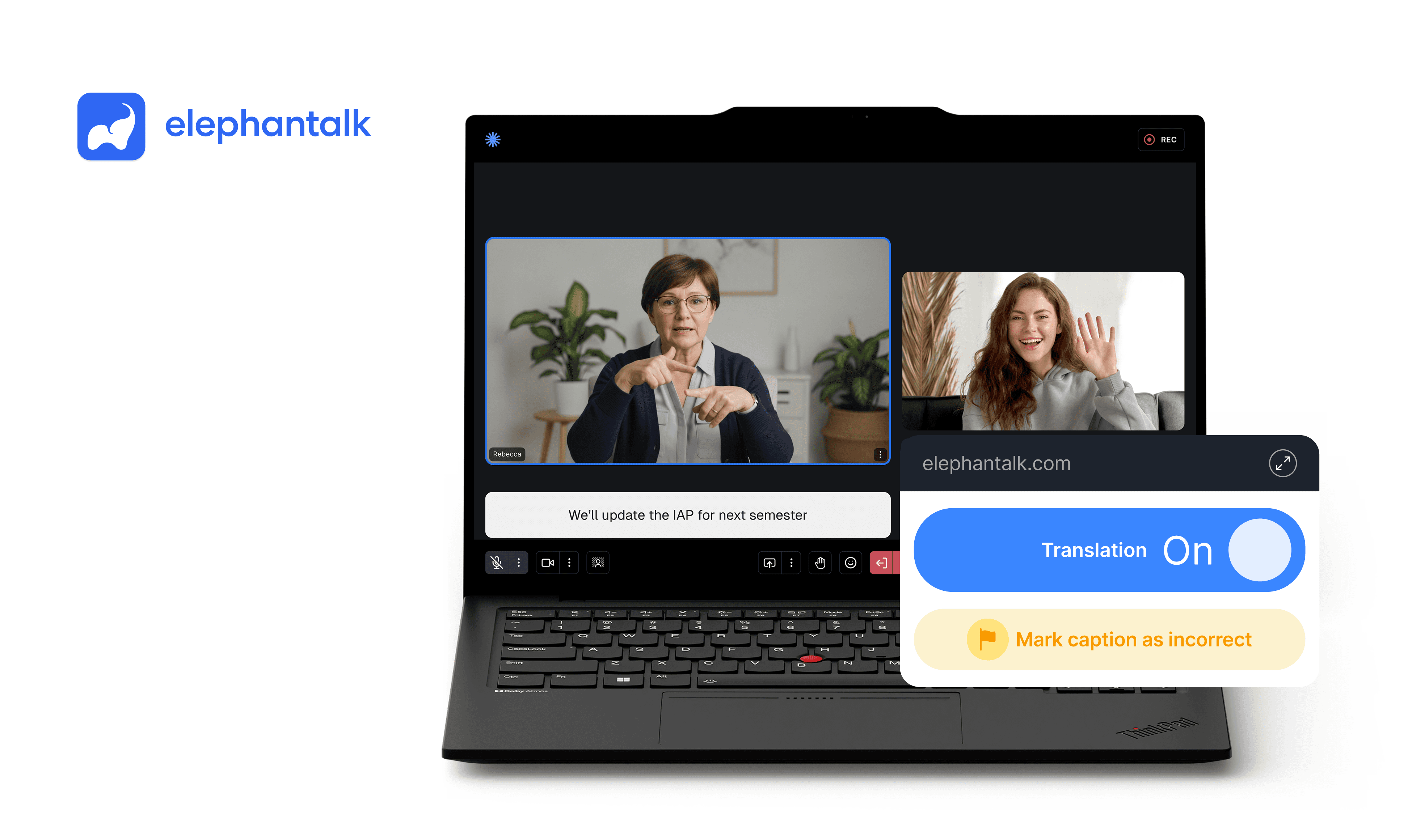
I designed elephantalk to explore a question: What would accessibility look like if users could shape it in real time? The result became a participatory communication layer - a system that listens, learns, and evolves with every conversation.
TIMELINE
5 months (2025-2026)
ROLE
Founding team Product Designer (Workflow design, IA, UX, rapid prototyping)
COLLABORATORS
CEO, Front/Back-end developer
COMPANY
Norric Inc.
Overview
What is elephantalk?
Elephantalk is a real-time ASL-to-text translation layer designed for inclusive meetings. It turns sign language into text and accessibility into participation. Built for U.S.-based Deaf and hard-of-hearing professionals, the system learns directly from users through federated feedback, creating a loop where every correction helps the model improve.
During the meeting
Turning translation on
When the meeting starts, the user simply activates the elephantalk widget. With one tap, translation turns on, signing instantly appears as live captions for everyone in the call.

One-tap toggle for both Deaf and hearing users
Works across Zoom, Google Meet, and Teams
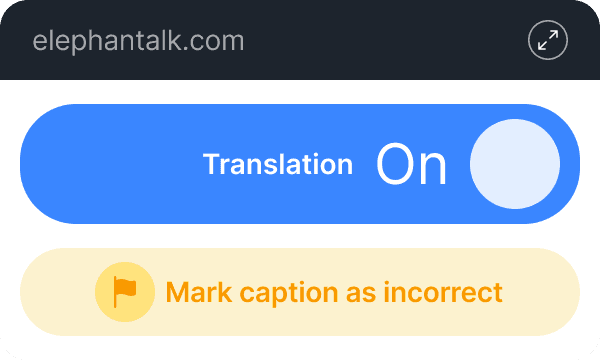
And if user sees any mistranslation, they can hit the button says "Mark caption as incorrect" and in their local device elephantalk will save their flag for later correction.
When meaning slips
Flagging an incorrect caption
If a caption doesn’t match what the user meant, they can tap “Mark caption as incorrect.”
The system saves this flag locally and learns how the user signs, capturing real context without interrupting the conversation.
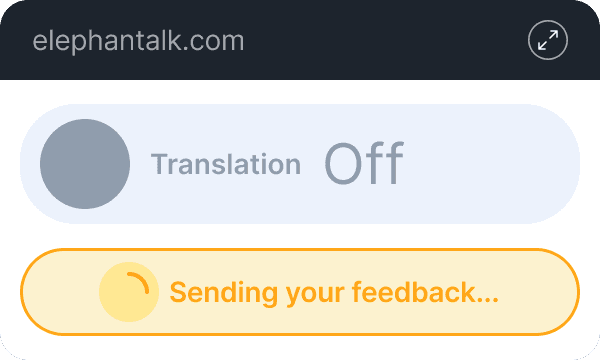
By letting users flag and correct interpretations, the system grows more accurate and personal with every meeting, redefining accessibility as a shared process, not a service.
After the meeting
Correcting and improving
After the session, users can review their flagged captions and input the right translation in their own words. Through federated learning, the model updates locally, building a personalized ASL-to-text engine that improves with every interaction.
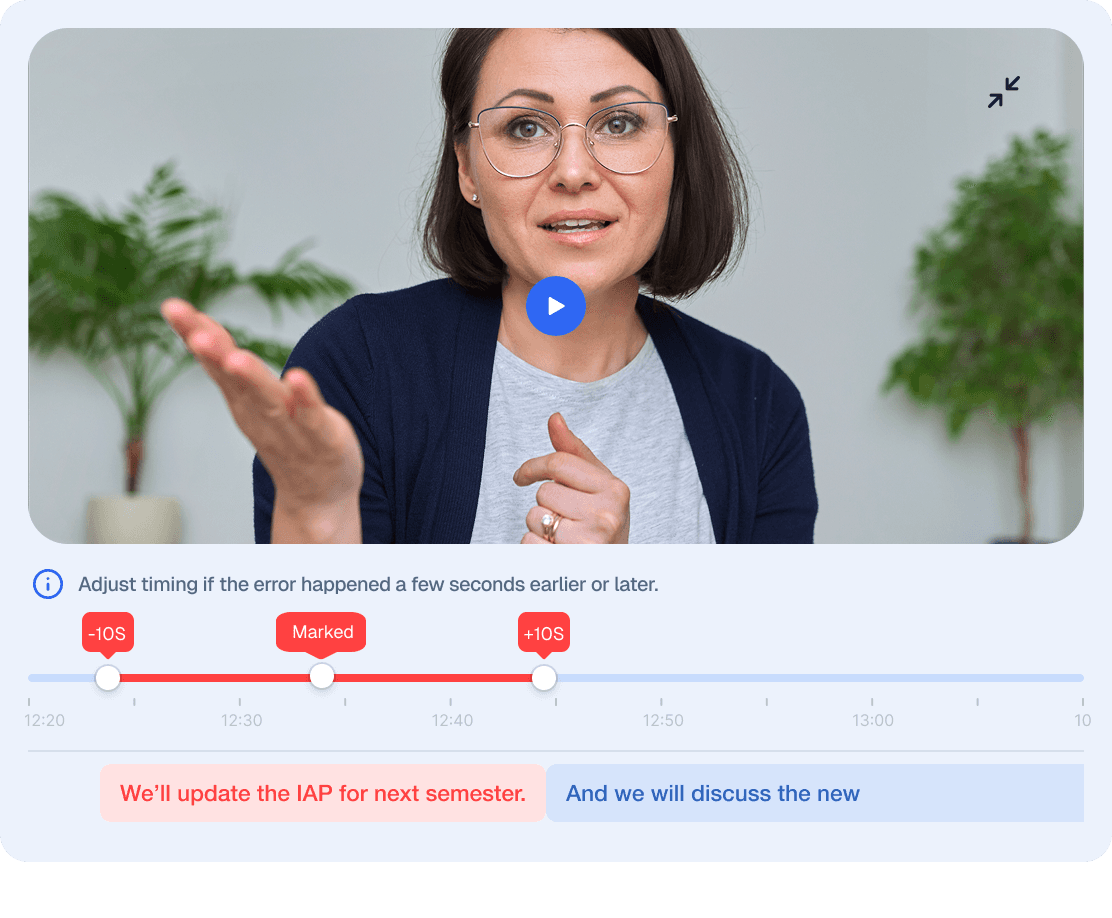
By letting users flag and refine captions, elephantalk grows more accurate and personal with every meeting, redefining accessibility as a shared process, not a service.
Brand&visual language
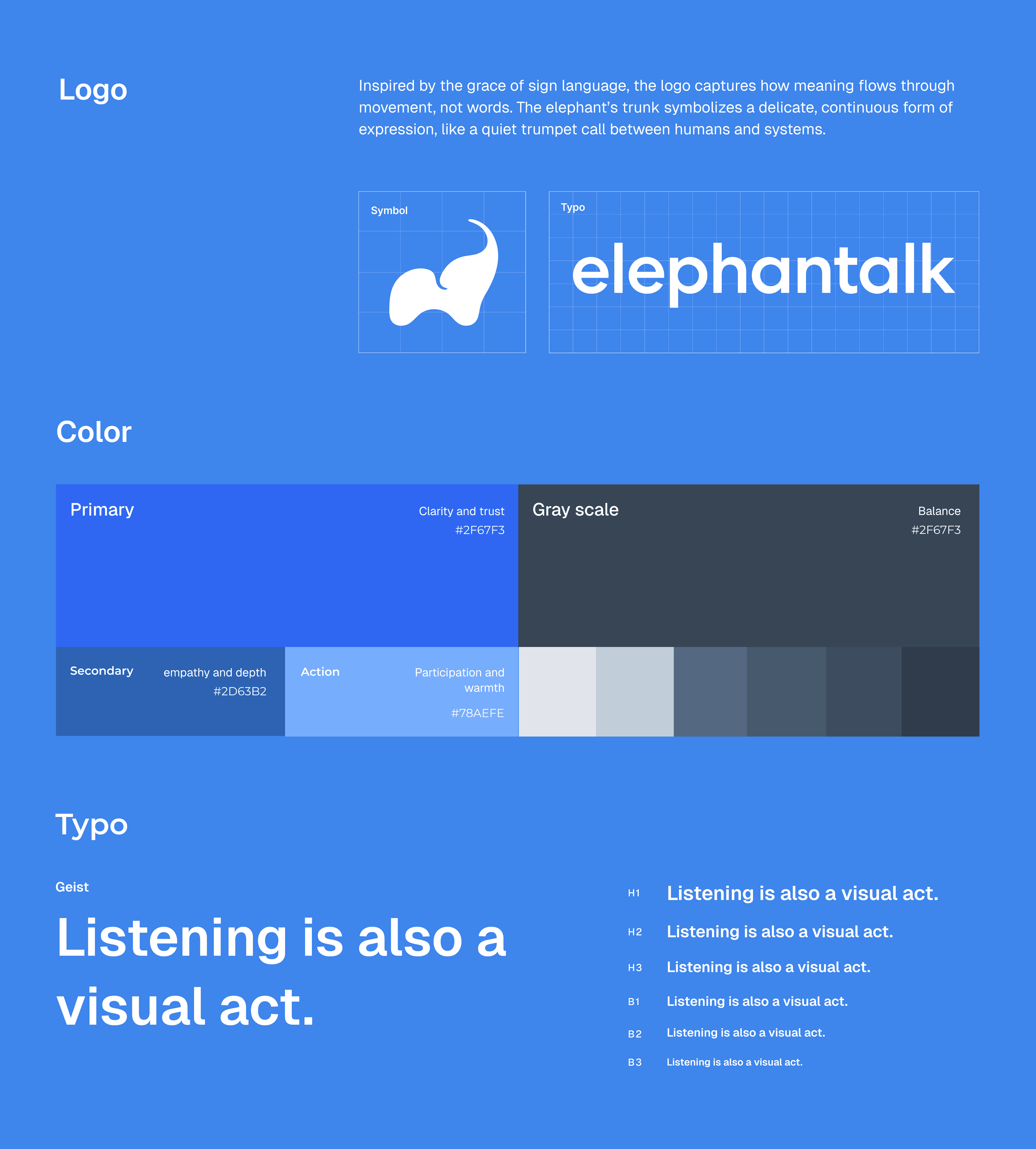
Building a design language of elephantalk.
When designing elephantalk’s brand identity, the goal was to make accessibility feel calm, connected, and trustworthy, not technical or assistive. Every visual element was built around the same principles that shaped the product itself: empathy, clarity, and participation.