Enhancing book discovery in physical bookstores through AR and design unification
In an age where physical spaces compete with digital convenience, South Korea’s historic bookstore Bandi & Lunis sought new ways to rekindle the joy of offline book discovery. Our team envisioned an AR-powered browsing experience that guides users through the store, highlights trending titles, and creates delightful moments of surprise along the way.
TIMELINE
Dec 2021 – Feb 2022 (3 months)
ROLE
UX & UI Design, Branding, AR Interaction, Spatial Design
COLLABORATORS
Adobe Aero, Figma, Blender
Self-Initiated
Academic Project — Seoul Women’s University, Industrial Design Department
Initiative
What if bookstores could help readers explore effortlessly, just like online platform, but without losing the joy of wandering?
In a time when online algorithms decide what we read, the joy of wandering through shelves is quietly fading. Our team set out to reimagine Bandi & Lunis, one of South Korea’s most iconic bookstores, as a space where technology amplifies human curiosity instead of replacing it. By combining AR interaction, brand redesign, and spatial renewal, we aimed to transform a static retail space into a living, learning experience.
Experience
Reframing the Bandi & Lunis bookstore experience
We mapped the in-store experience into three key emotional moments:
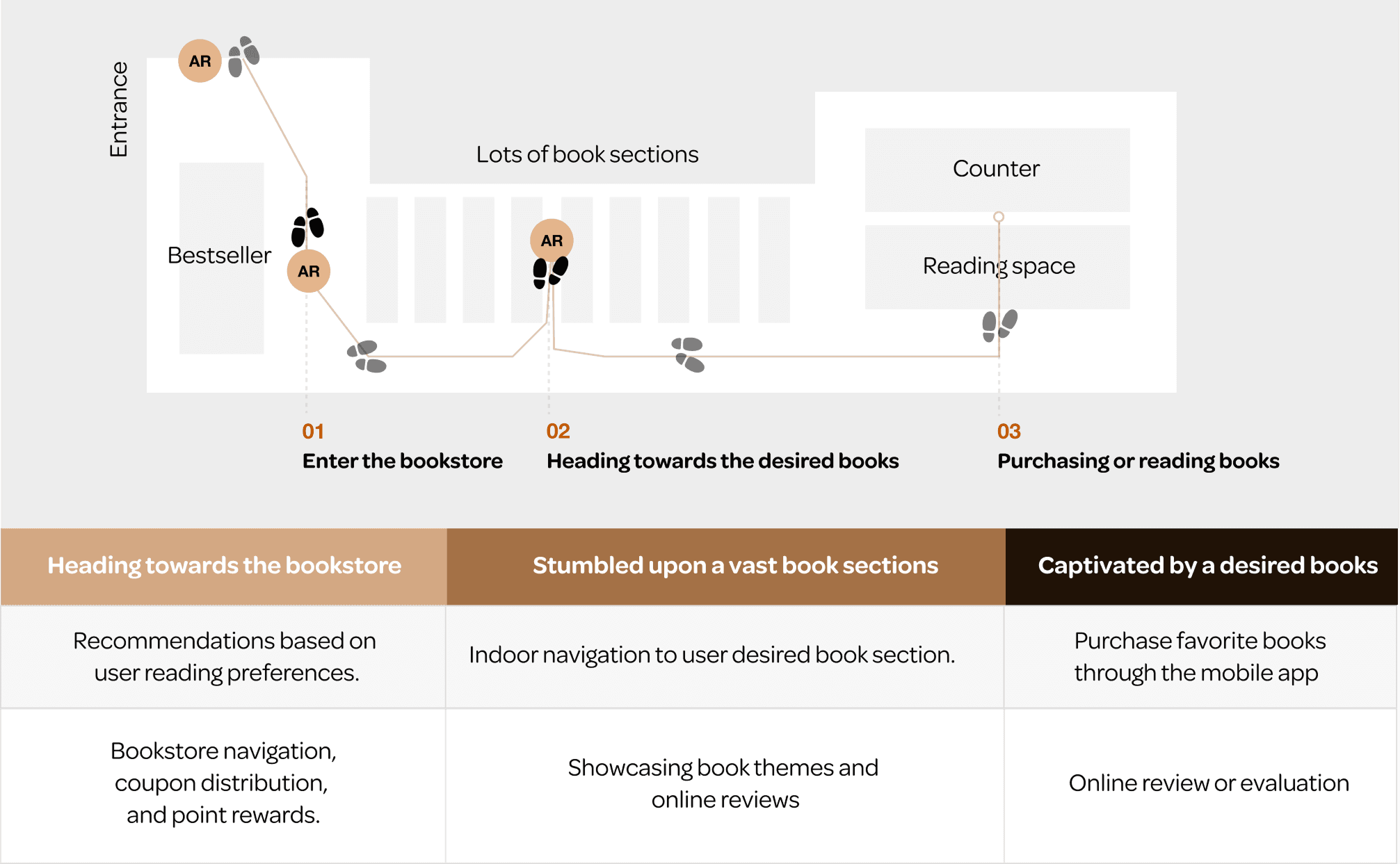
This journey design helped us preserve the emotional flow of browsing—only now, enhanced with AR.
This journey helped us design a system that keeps the emotional flow of browsing intact—just enhanced by AR.
Experience First
Discovering Books as an interactive journey
Visitors often feel overwhelmed by the scale of bookstores and unsure where to start. The challenge was to turn wandering into guided exploration, without losing the serendipity of traditional browsing.
Heading towards the bookstores
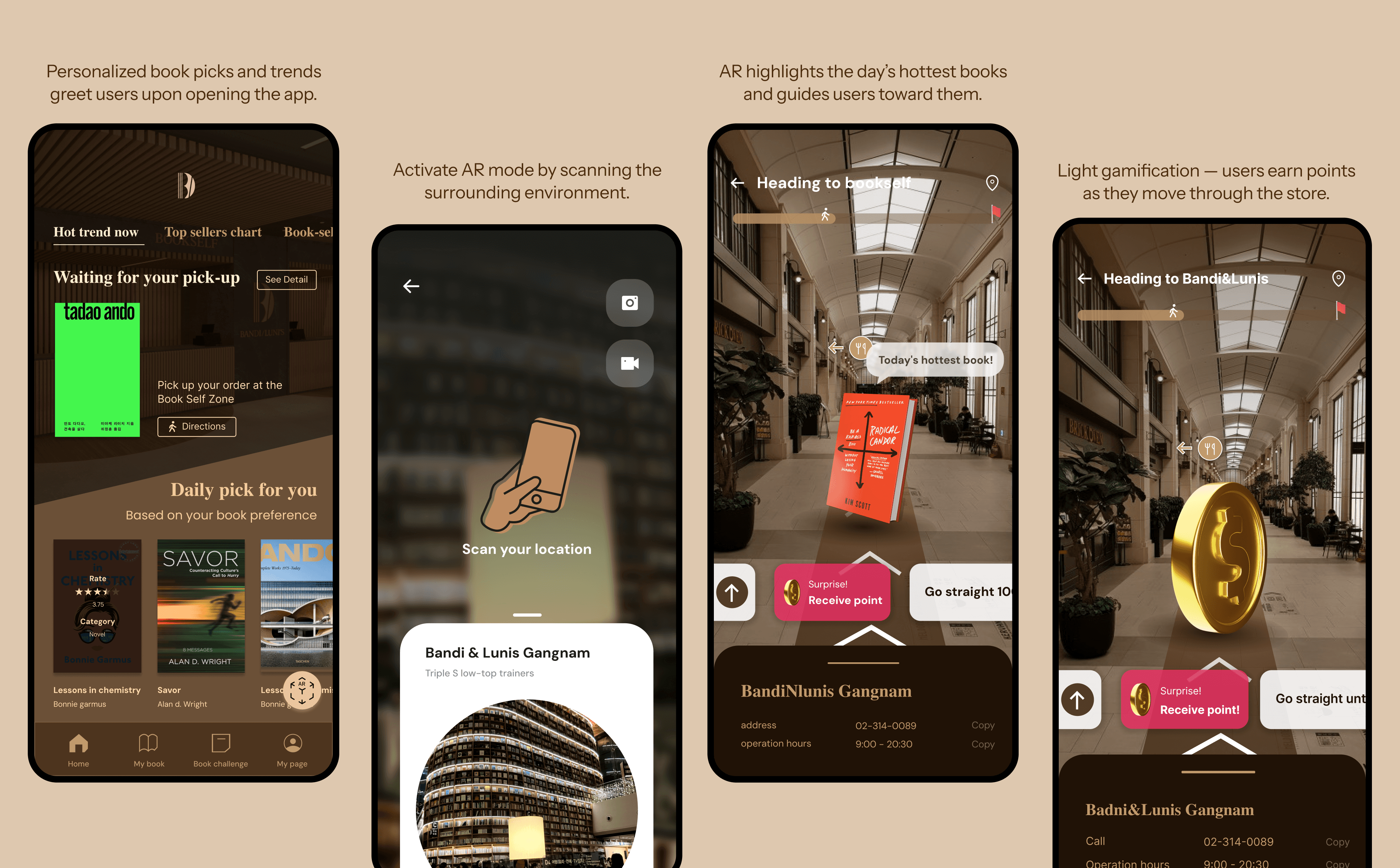
Stumbled upon a vast book section
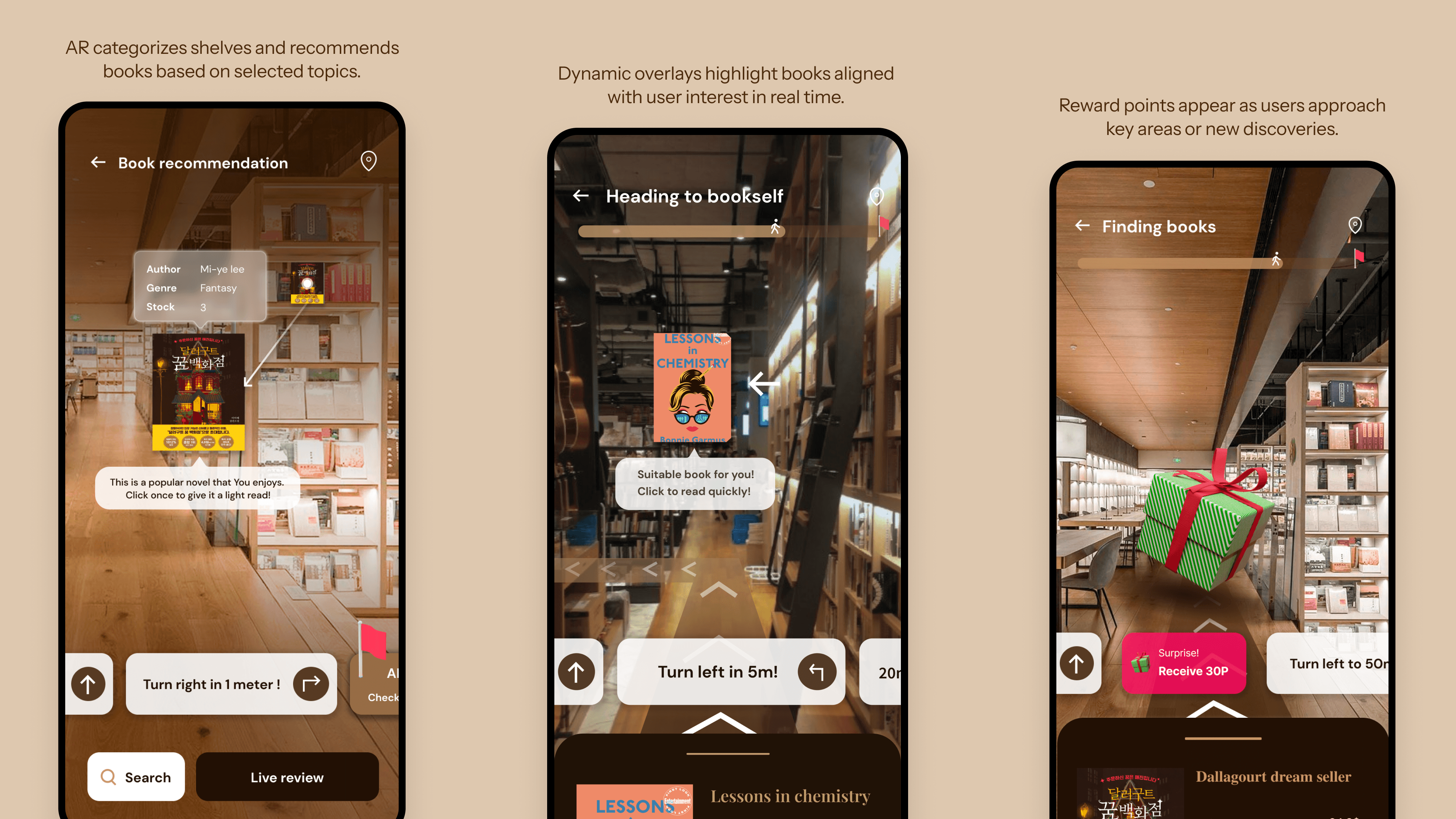
Captivated by a desired books
Background
Why Bandi & Lunis and why bookstores?
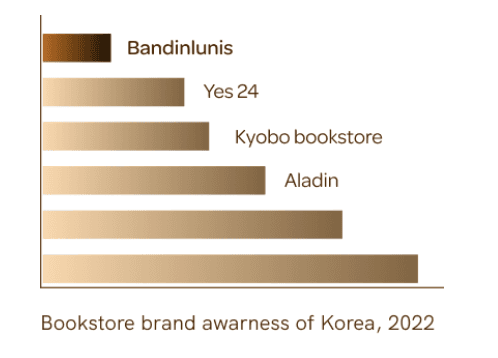
Once one of Korea’s most recognized bookstore brands, Bandi & Lunis had begun losing relevance in the digital age. Competitors like Kyobo and Yes24 embraced digital ecosystems early, while Bandi & Lunis struggled to bridge its physical presence with the online discovery habits of modern readers.

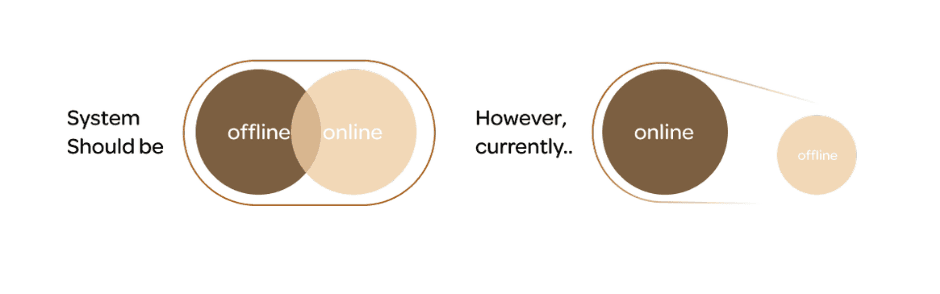
As digital platforms dominate book recommendations, the brand’s offline experience grew static and unclear. We saw this as an opportunity not just to redesign an interface—but to redefine what a physical bookstore could mean today.
Research
Listening to readers and staff inside the bookstore
We conducted interviews with two groups - bookstore visitors and staff, to uncover the main friction points and behavioral patterns in offline book discovery.


Staffs said…
“We spend more time explaining directions than talking about books.”
Many customers experience decision paralysis when faced with endless book sections.
Readers said…
“I feel lost. There’s so much to see that I end up not finding what I want.”
Staff members frequently handle repetitive questions about book locations and recommendations.
We saw this as an opportunity to redefine the role of physical bookstores — not as outdated retail, but as spaces for interactive cultural experiences.
Space research
Understanding spatial overwhelm in large bookstores
Our spatial analysis revealed that the sheer scale of Bandi & Lunis can unintentionally create decision paralysis for visitors. The multi-level layout and dense shelving system make it difficult for first-time customers to know where to start.
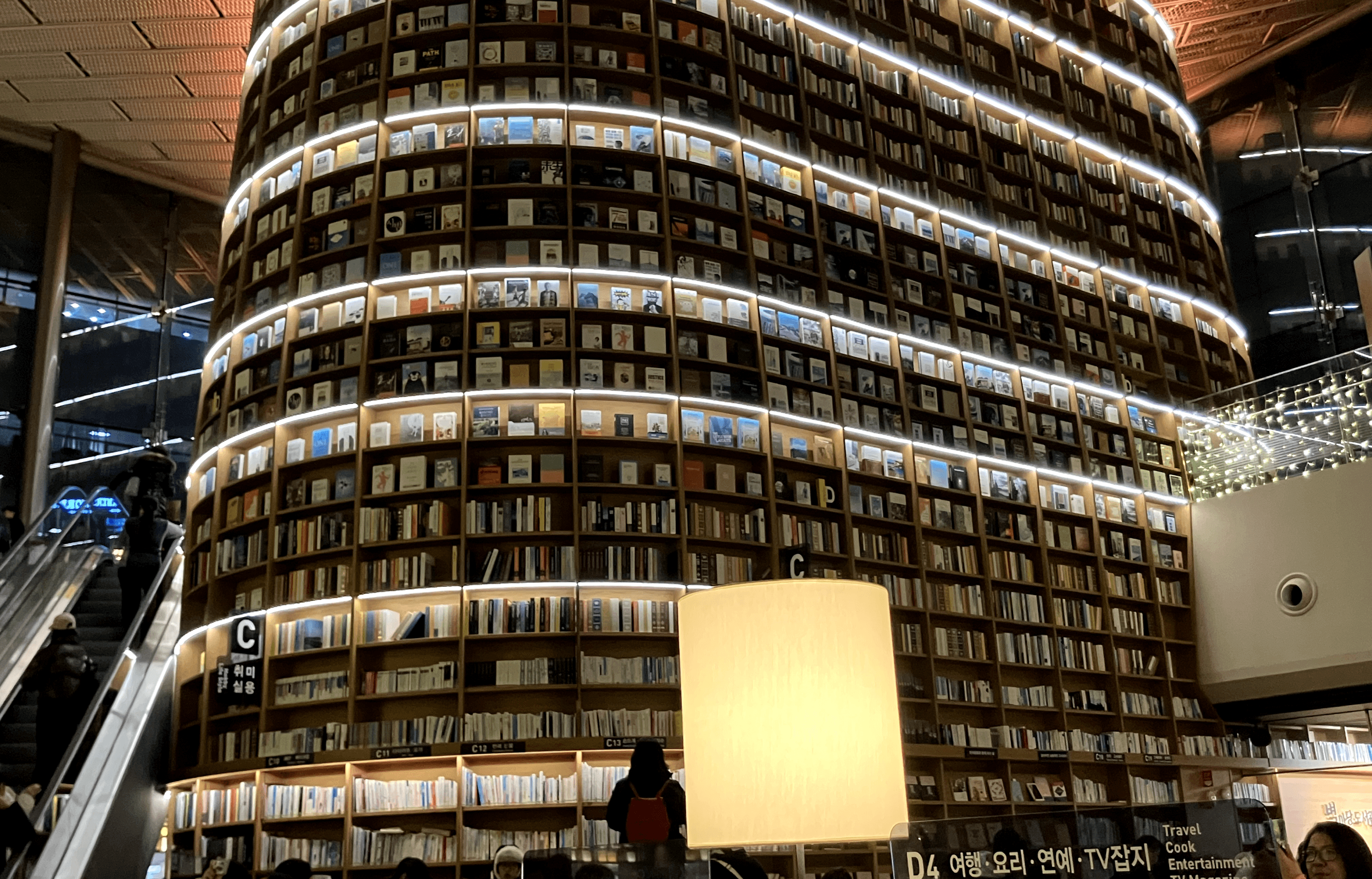
Many described the experience as “It feels like a treasure hunt that becomes exhausting.”
We identified four recurring perceptions:
By mapping emotional and behavioral patterns, we saw that gentle guidance and curation could transform confusion into curiosity.
Solution
Making book discovery intuitive with AR
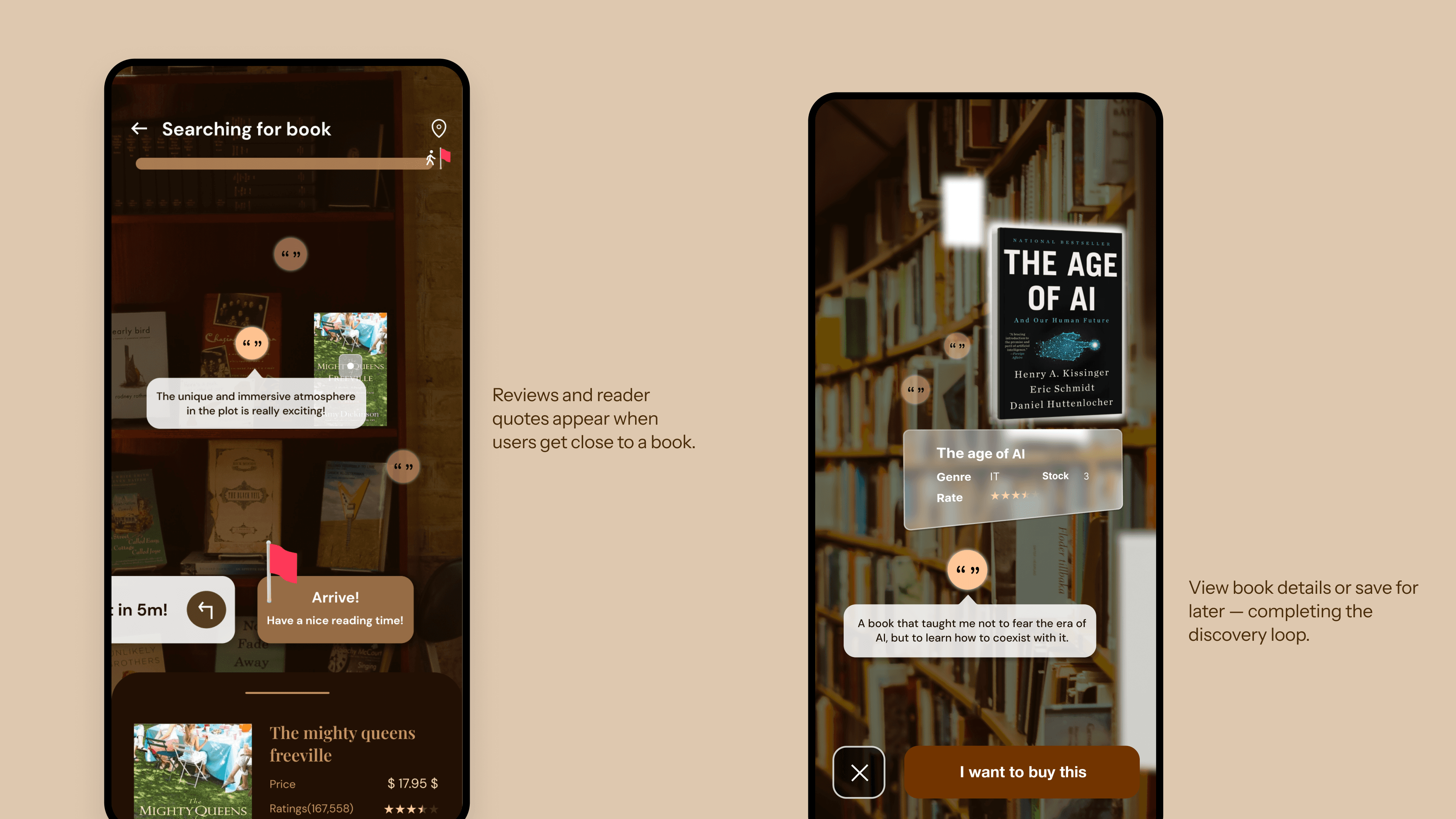
We used AR to translate overwhelming spatial layouts into guided, meaningful interactions.
Readers can easily navigate, discover personalized titles, and reconnect with the joy of browsing through subtle digital layers.
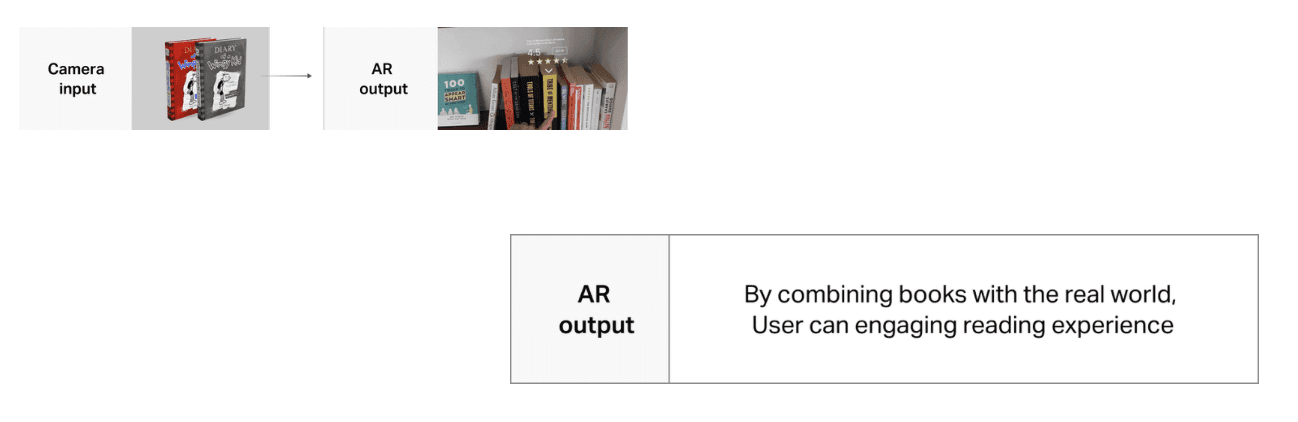
By combining books with the real world, we designed an experience that reawakens curiosity, one shelf at a time.
Testing & results
AR Feature User testing
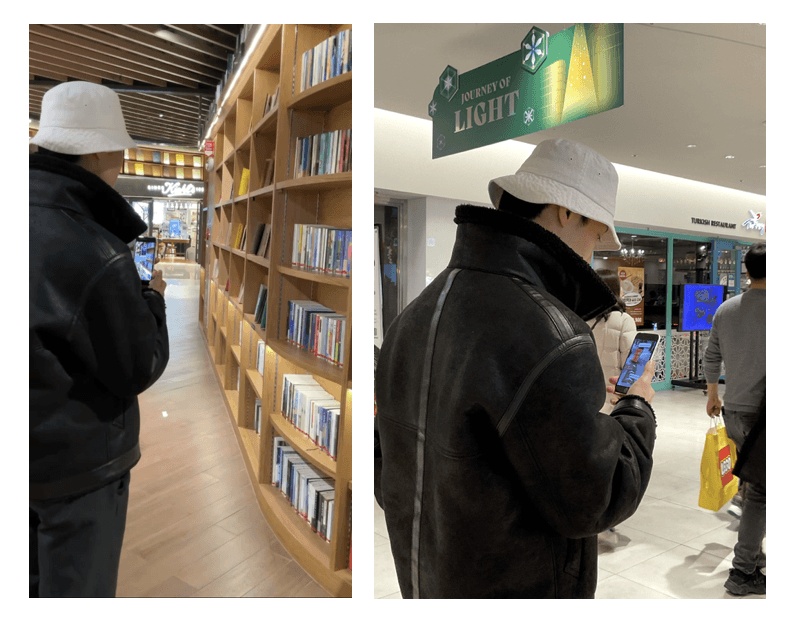
User testing at the bookstore revealed how AR enhanced engagement and enjoyment.
Readers spent more time browsing and expressed particular delight
when contextual reviews appeared as overlays beside books.