Kyuri K
Product Designer + strategist
Building beyond library walls, UNICEF-backed mobile learning service for underserved kids & Parents
TIMELINE
6 months (2025.02-2025.08)
ROLE
Exprience & Service Designer
COLLABORATORS
SFPL librarians, 2 Designers, Advisor(Porfessors), Parents & Kids
PROJECT TYPE
Social Impact project built by collaboration with CCA X UNCIEF USA Innovation node
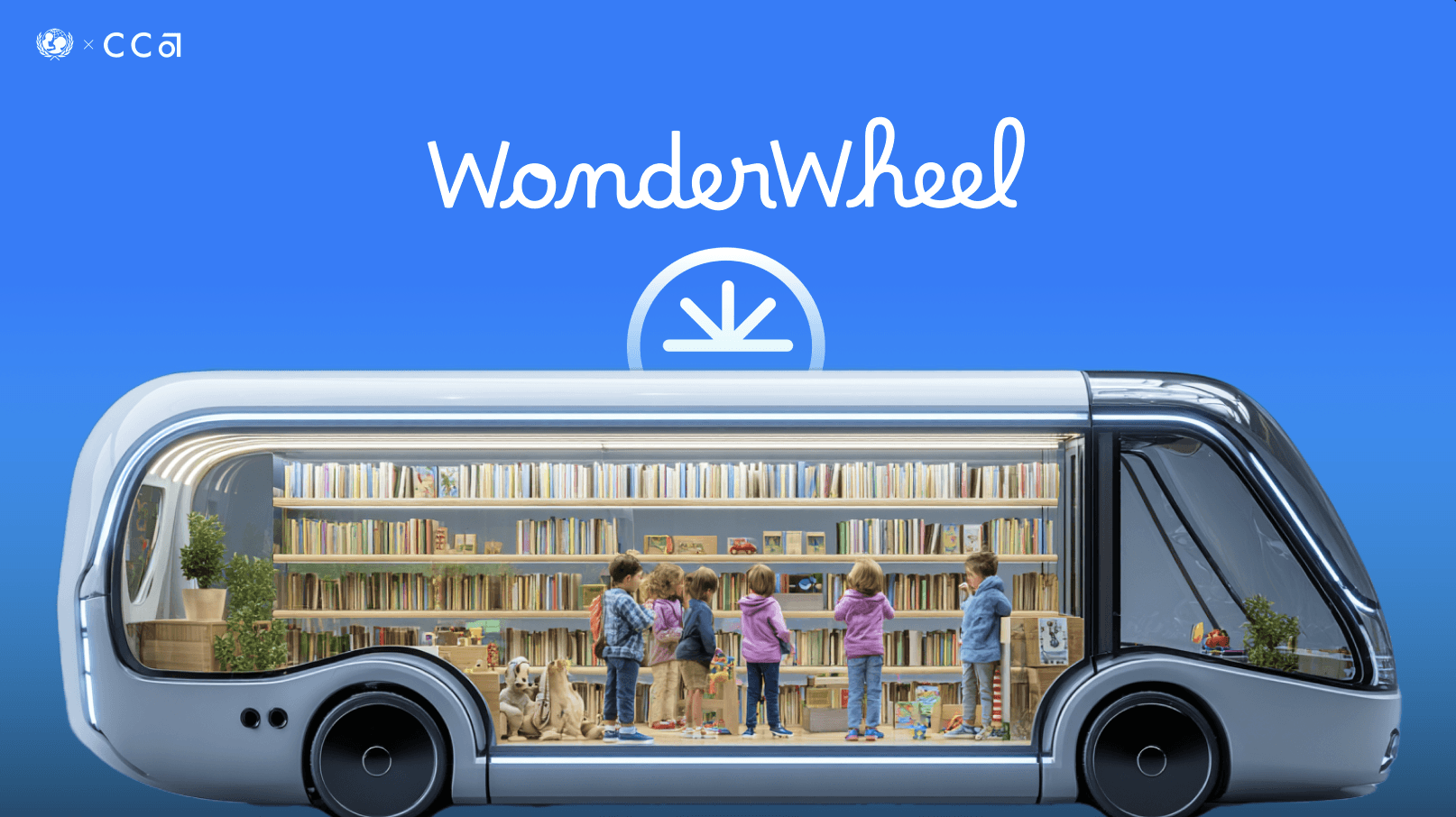
Wonder Wheel is a service design project that explores how mobility and AI can expand access to reading for children living in rural library deserts. Rather than treating libraries as fixed places, the project reframes them as mobile learning infrastructure that actively reaches families where access is limited.
what is wonderwheel?
A Library that doesn’t wait
Problem framing
However, Access fails before motivation
6.6 million children live in library deserts.
In rural communities, access to books is constrained by distance, transportation, and limited public infrastructure. As a result, learning opportunities depend heavily on what is already available at home. This leads to inconsistent exposure to reading during critical early development stages.
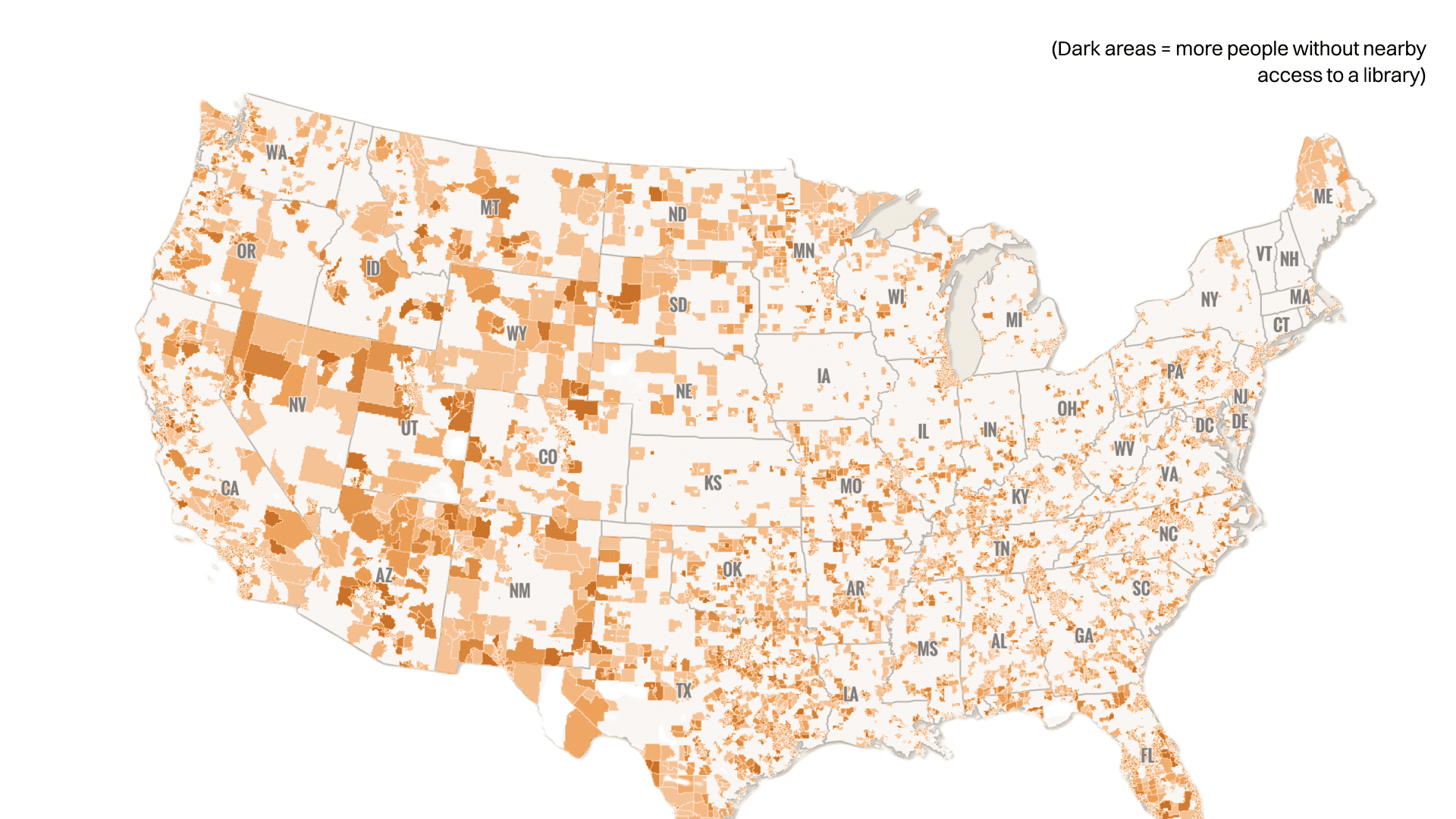
The core issue is not motivation or behavior, but access at the system level.
What i saw on the ground
However, Access fails before motivation
I spoke with parents&Librarians living in rural communities where the nearest library was 30–40 minutes away.
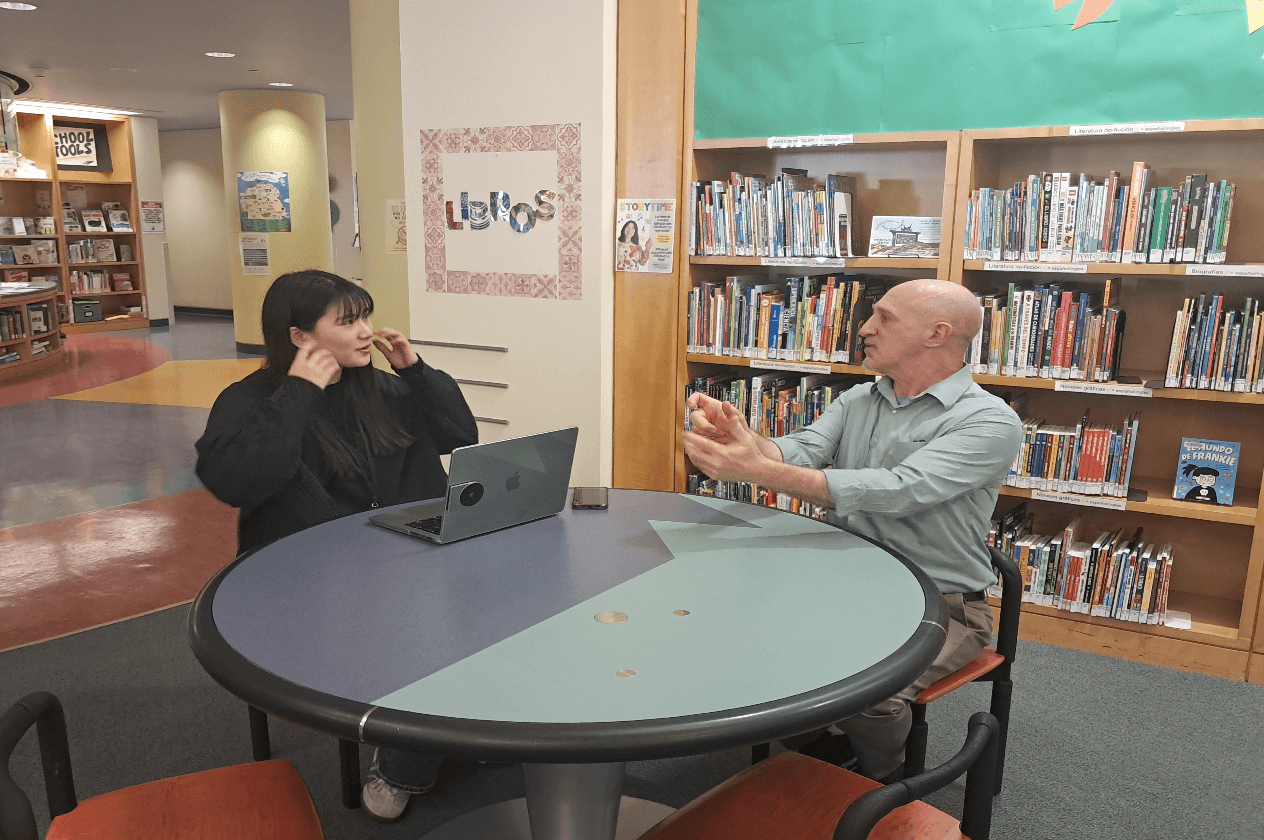
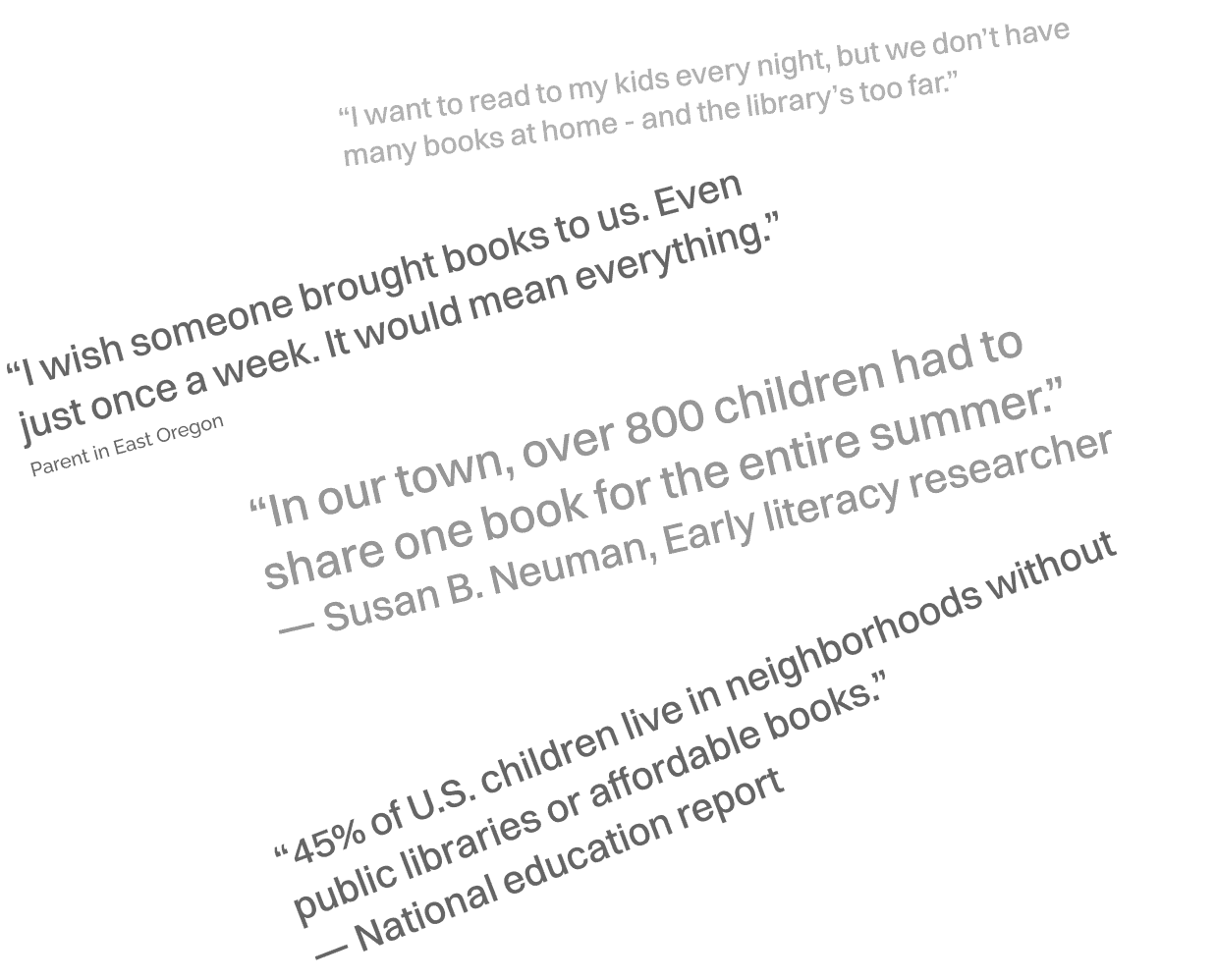
What stood out was not a lack of motivation. Parents wanted to read with their children—but distance, time, and daily logistics made it hard to do consistently. Reading wasn’t absent by choice. It was fragile because access was fragile.
Reframing the problem
However, Access fails before motivation
6.6 million children live in library deserts.
This shifted the way I framed the challenge. The issue wasn’t how to make children like reading more.
It was how to make reading reliably available in places where infrastructure had failed to keep up.
The core issue is not motivation or behavior, but access at the system level.