A minimalist editorial photoshoot highlighting handcrafted ceramics in natural light for use across print and digital.
© Tuning the invisible, Designing an AR interface that listens to your senses
I redesigned Effic’s developer dependent CRM into a no code, marketer driven workflow.
In five months, the product grew from a simple A/B tester into a scalable automation system used by 50 plus businesses and driving 6× revenue growth.
TIMELINE
5 months
(2023-2024)
ROLE
Sole Founding Product Designer
(Workflow design, IA, UX, rapid prototyping)
COLLABORATORS
Product Manager, Front/Back-end developer
COMPANY
Teamsparta Inc. (Edtech SMB
Achievement
5
5
5
5
0
0
0
+
+
+
Adopted by SMBs and startups Teams launched campaigns on their own
6
6
6
6
X
X
X
Increase in CRM-driven revenue Clients saw measurable lift after switching to Effic
6
6
6
6
0
0
0
%
%
%
Marketers launched campaigns without dev handoffs
How it works
Reimagining CRM automation for lean teams
In late 2023, I designed a no-code workflow that lets marketers launch campaigns without engineering bottlenecks. But why we made this? Lean teams couldn’t launch campaigns without engineering help. Even small changes required SQL, data exports, and long handoffs.
So I redesigned Effic into a no code workflow that marketers could run independently.


Designing a workflow that mirrors
how marketers think
Step 1 — Define your audience
Segmentation was rebuilt to be visual and intuitive. Instead of SQL heavy dropdowns, marketers can pick audiences directly, new users, repeat buyers, inactive users.
Step 2 — Set conditions
I translated logical operators into plain language (“When this happens, do that”). This made automation accessible to beginners while preserving depth for advanced users.
Step 3 — Compose the message
Marketers previously jumped across tools to write and test messages. I combined message creation and preview into one flow to reduce cognitive switching.
Step 4 — Schedule & launch
Teams choose timing, frequency, and goals from a unified view. They see real time progress immediately, no dev handoffs or context loss.
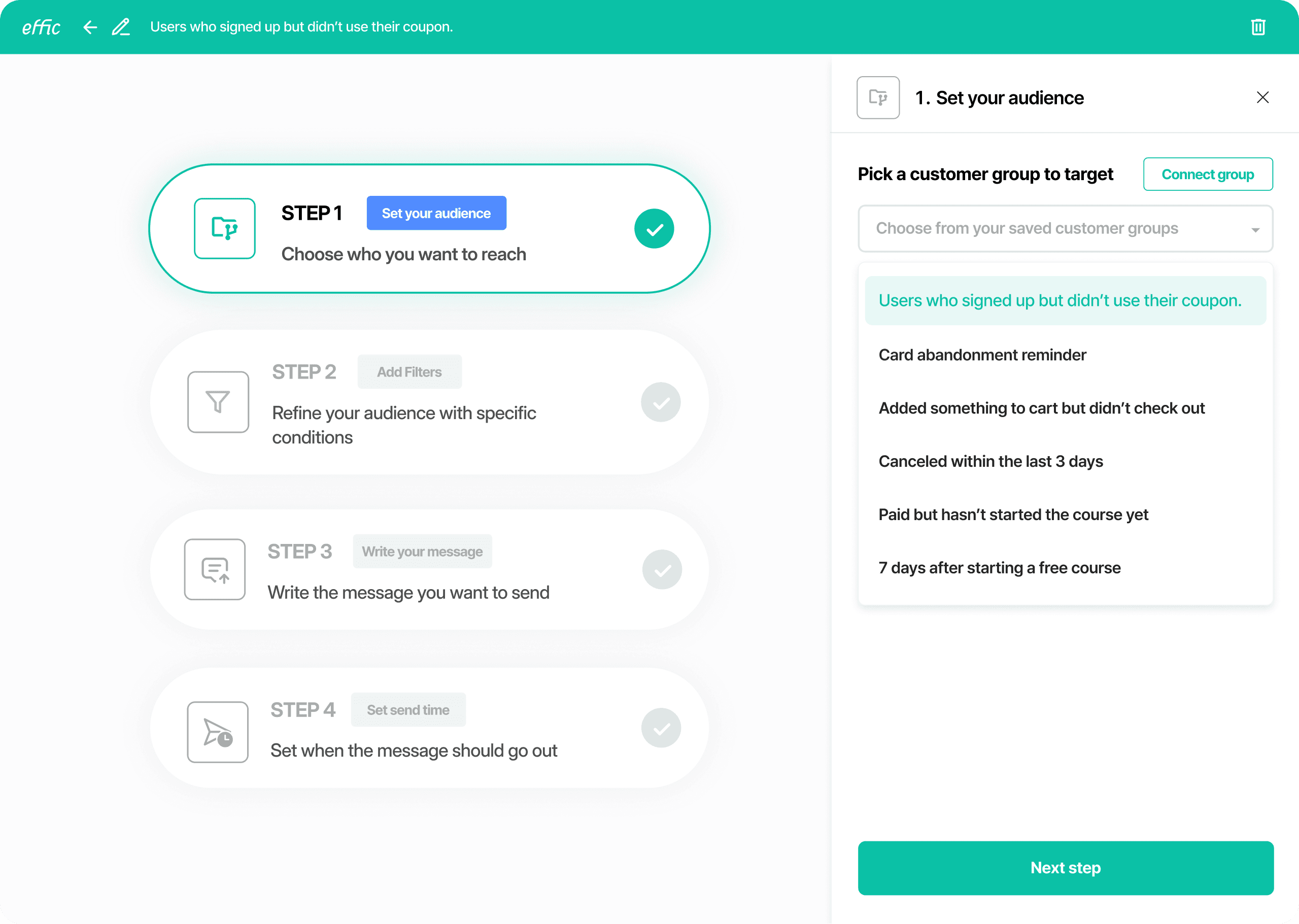
Timeline
From a stalled MVP to a clear product direction in 5 months

What began as a weak A/B testing tool lacked real value. Instead of scaling it, I stopped development, returned to users, and reframed the product around their actual decision-making needs. Within five months, the rebuilt version became the foundation of CRM campaigns for 50+ businesses.

Start point
Why CRM was the real bottleneck
In edtech, growth depends on retention more than acquisition.
At Team Sparta, thousands of student relationships needed timely messages, reminders, and follow ups. CRM became the core engine for re enrollment and referrals.
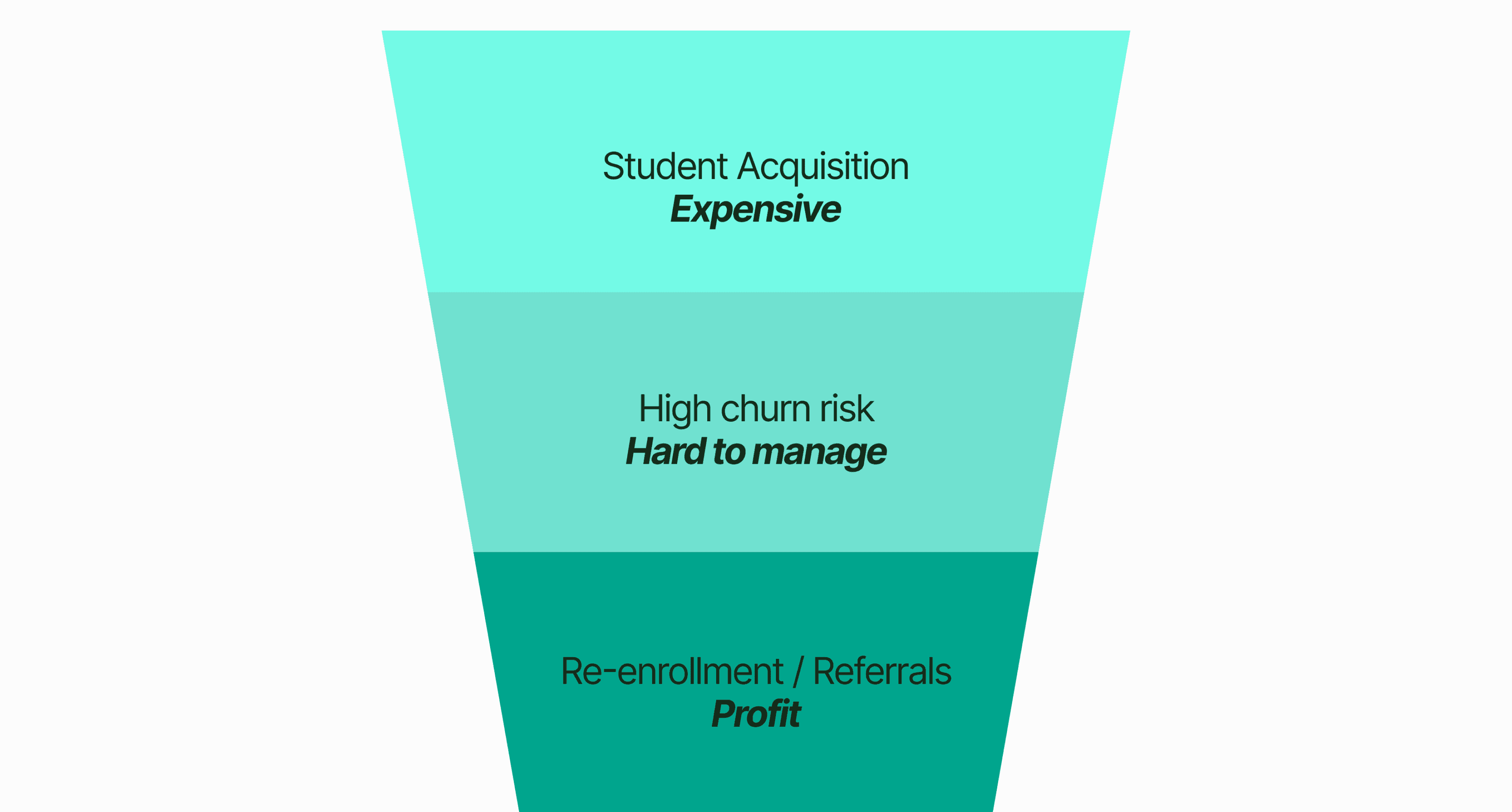

Team Sparta is an edtech startup in Korea known for programs like Sparta Coding Club and Tomorrow Learning Camp.By 2023, it had reached $24M in revenue - but that growth depended on managing thousands of student relationships efficiently.
But the tools we used weren’t built for lean teams.
Every update required SQL, data exports, or developer support.
Teams moved slowly, experiments stalled, and insights arrived too late.
Impact
Impact was slow to measure
Manual spreadsheets delayed insights and decisions.
Experiments
Experiments stalled easily
Even small A/B tests needed developer setup and multiple tools, breaking the creative flow.
Execution
Execution dragged
Campaigns sat in engineering queues instead of reaching users when it mattered most.
Lean teams didn’t need another CRM interface. They needed a faster, clearer way to think and act on user relationships, without relying on engineers.
1st attempt
Our first bet: What if we built a lightweight A/B testing tool for teams like us?
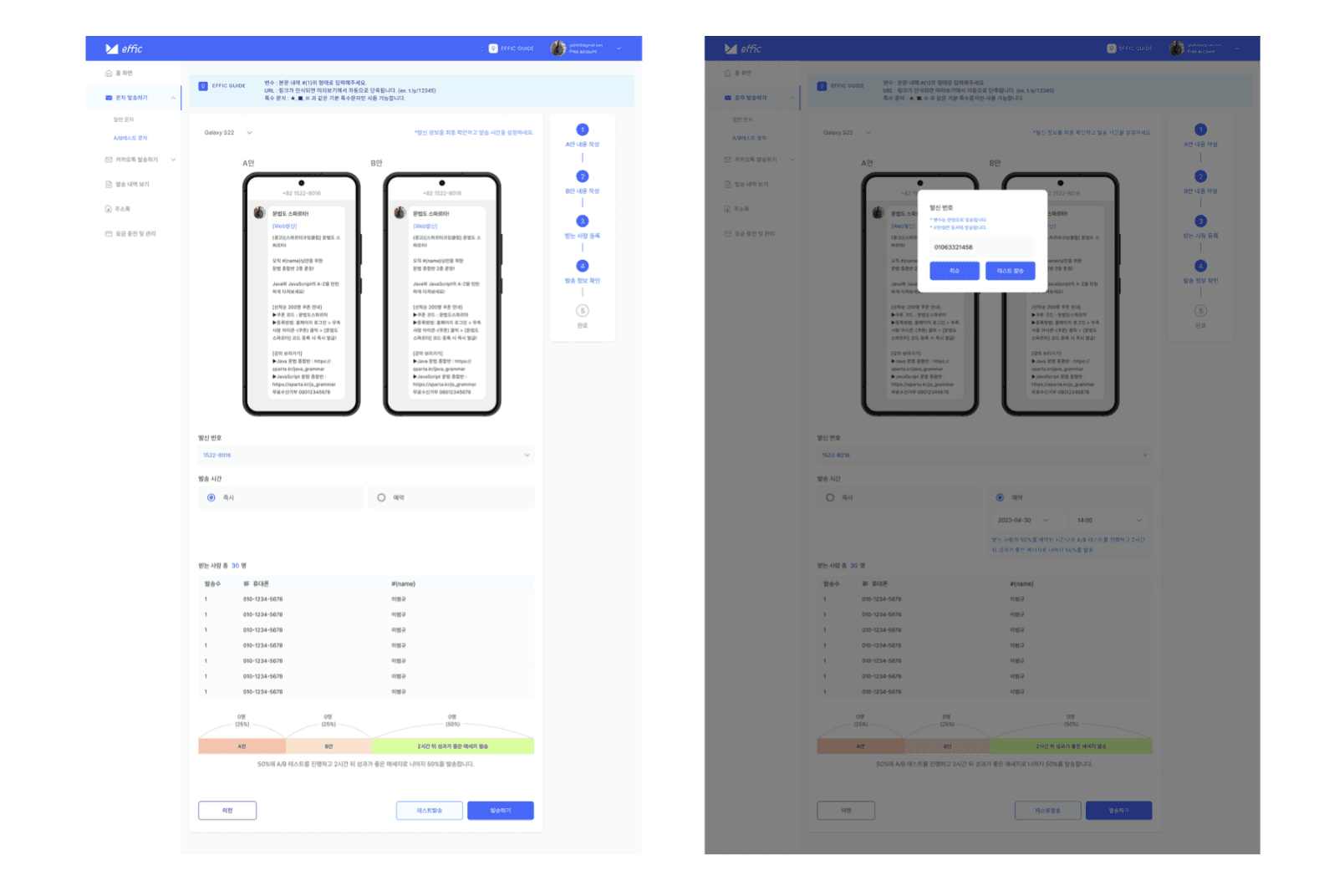
First internal A/B testing tool we built in early 2023.
Our first idea was to build a simple A/B tester so teams could optimize message timing.
It worked technically, but it didn’t solve the real problem.
Teams didn’t need better delivery optimization, they needed autonomy from engineers.
The 1st result
Technically complete. Practically irrelevant.
Our A/B testing tool launched, but adoption stayed flat.
Teams didn’t want more test variants, they wanted a way to run sequences, set timing, and track conversions.

Our team hosted Webinar in mid 2023 to promote effic's 1st launch
Lesson 1 : DTC teams didn't need A/B tests at all.
“I just need to send coupons at the right time - not test 5versions of the message.”

E-commerce business owner
Lesson 2 : Startup marketers & PM wanted more control.
“A/B testing is great, but I need to run sequences, track conversions, and report results to my CEO.”

Startup marketer
Pivot through failure
What were we missing?
After interviewing 20 plus marketers across different industries, one theme kept repeating:
"I just want to send this message now"
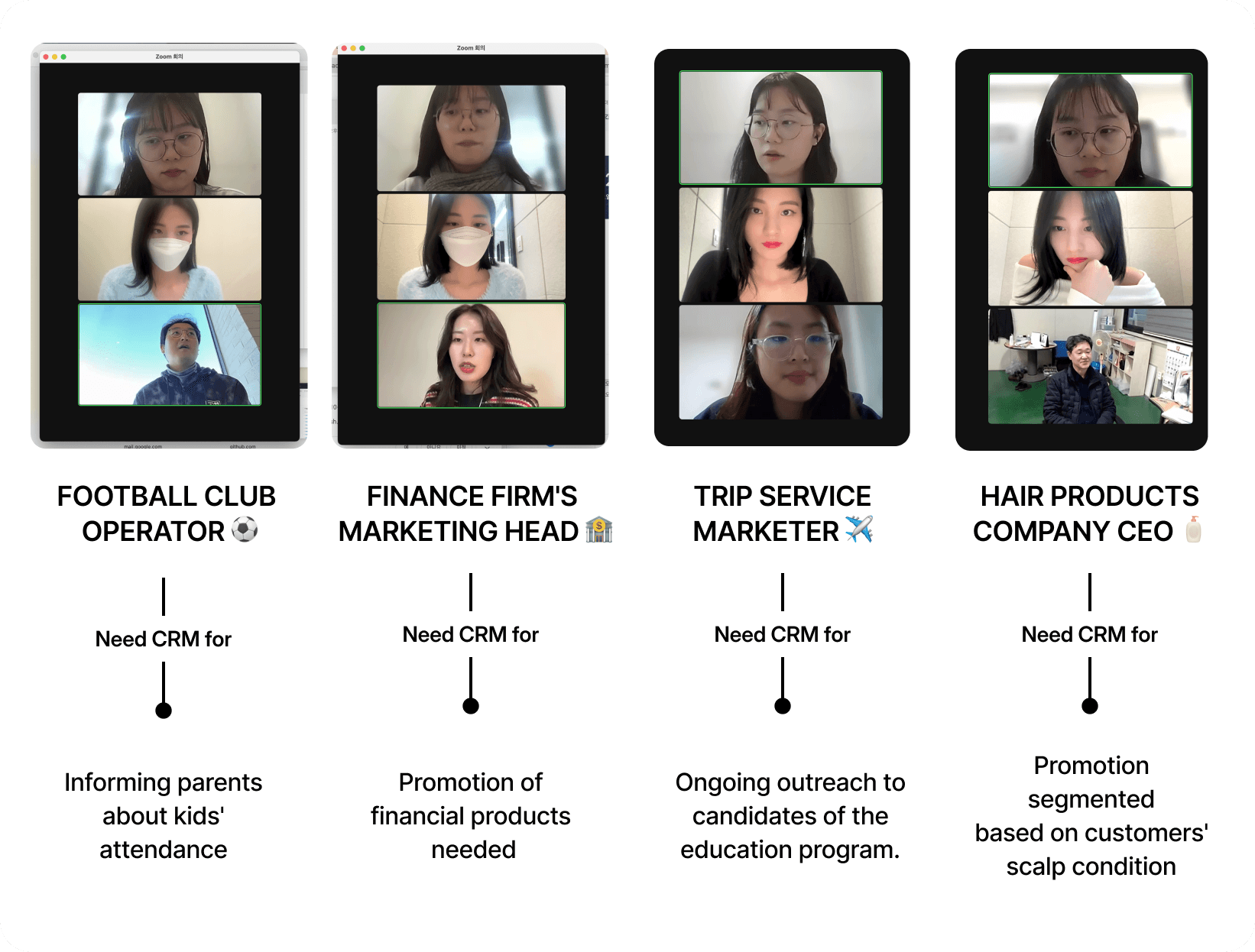
Despite different use cases, teams shared the same blocker:
CRM tools required technical steps marketers couldn’t perform.
KEY finding
Small teams didn’t struggle with CRM ideas, they struggled with ownership.
Marketers, PMs, and developers each handled a piece of CRM, but no one could run the full process end to end. Every step required engineering, creating delays and breaking momentum.
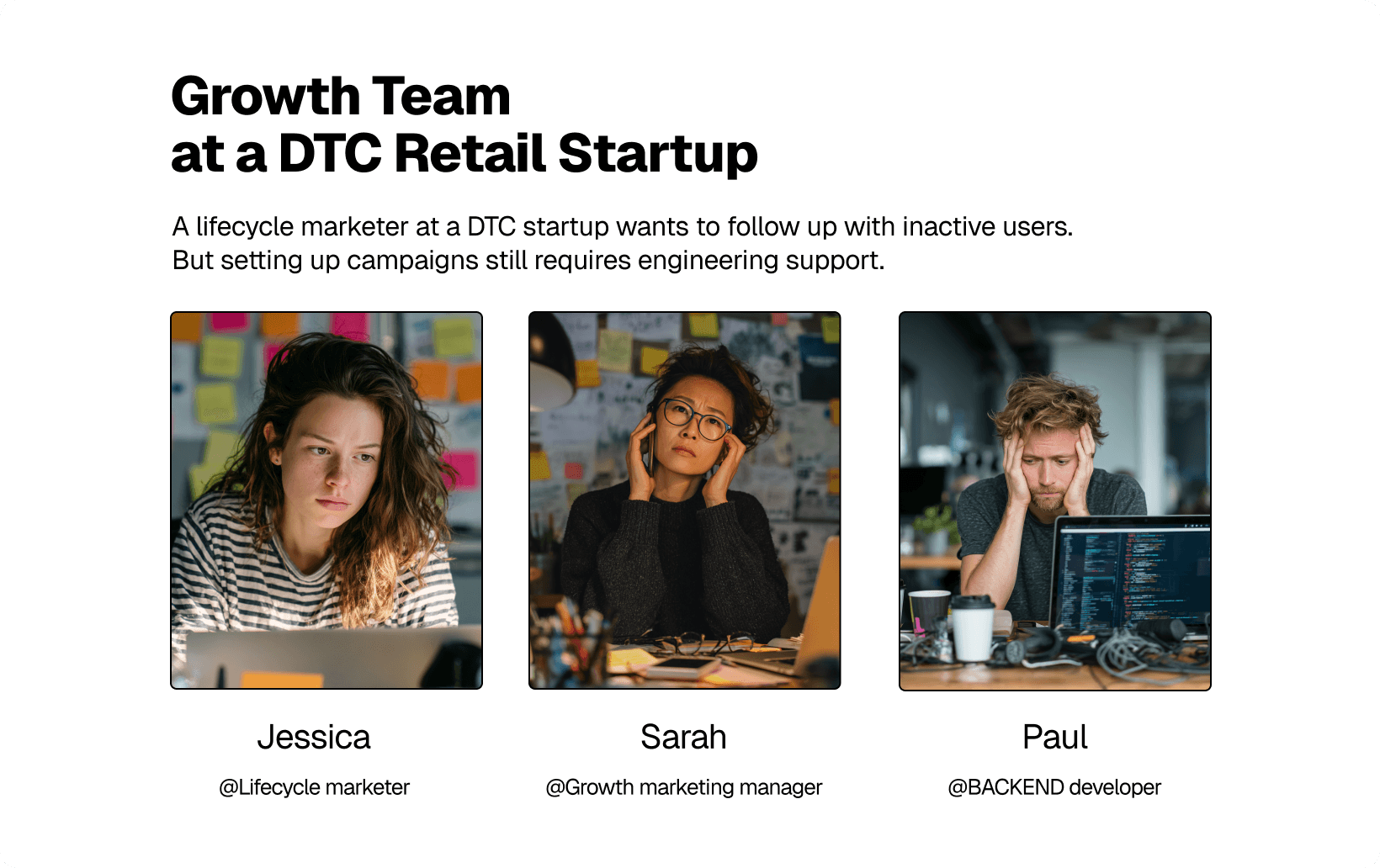
Problem 1
Campaigns sat in developer queues
Marketers had campaigns ready to launch, but every step, from audience segmentation to delivery,
required dev support. This bottleneck delayed launches and killed momentum.

Ask Developer to pull
target audience
⚠️ Bottle neck
⏳ Wait in Dev queue

Marketer/PM has a new
campaign idea
Dev uploads list &
Sets up CRM tool

Marketer writes copy,
but needs Dev to send

Sometimes confirm
details with Sales rep
Problem 2
Existing CRM tools were built for enterprise scale, not lean teams
Most CRM platforms were built for enterprise scale, complex, expensive, and slow to implement.
Lean teams needed something simpler, faster, and owned by marketers themselves.
One line solution
Designing the pivot: from insight to interface
We rebuilt Effic around one principle, marketers should be able to launch campaigns without engineers. The goal was simple: make CRM automation as intuitive as sending an email.
What if CRM automation was as simple as scheduling an email? 📧
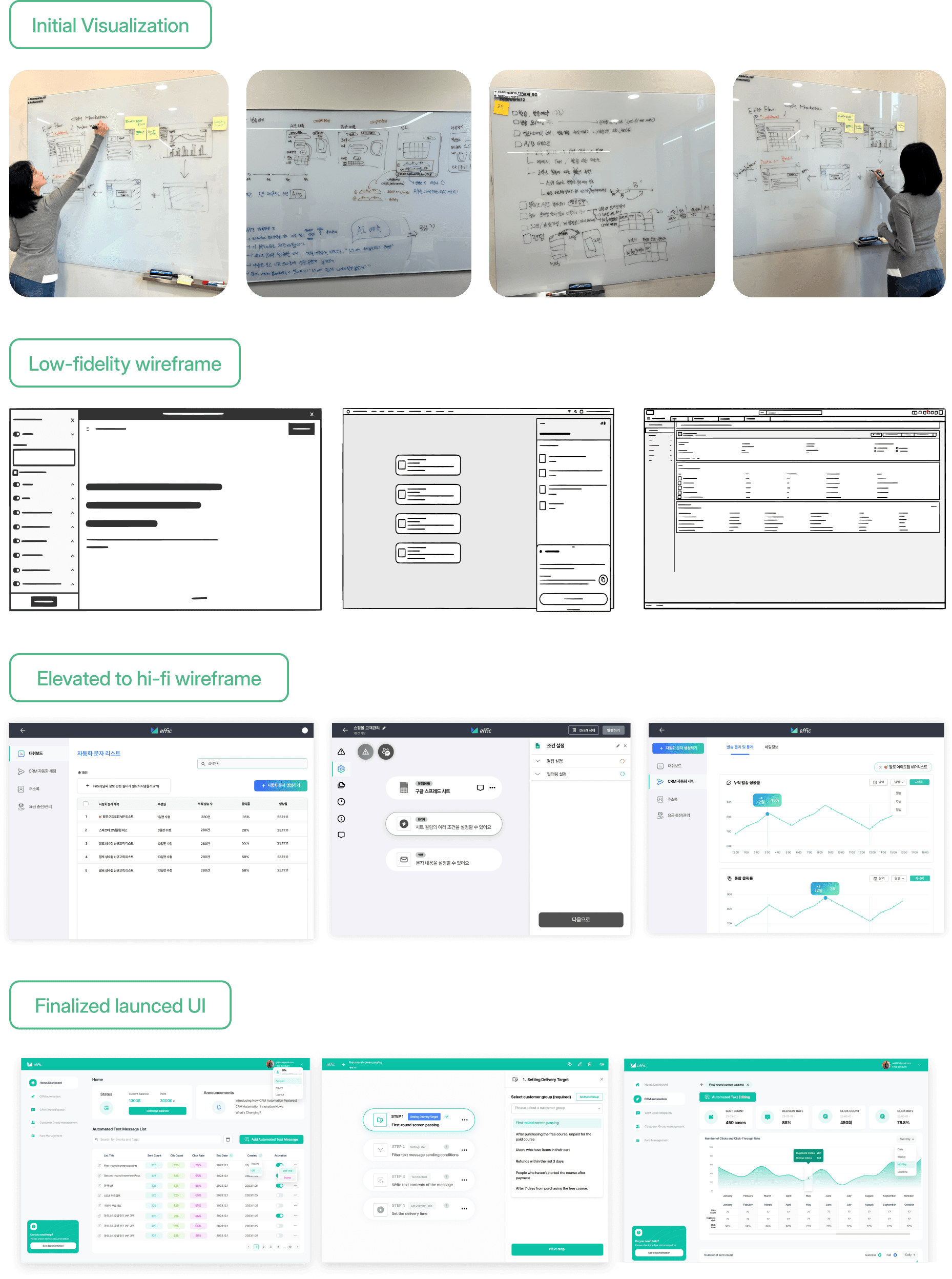
Started from whiteboard sketches → tested wireframes with users → launched a clean, self-serve UI that marketers could use independently.

UI walkthrough
Jessica, once overwhelmed by CRM,
now handles it effortlessly with Effic.
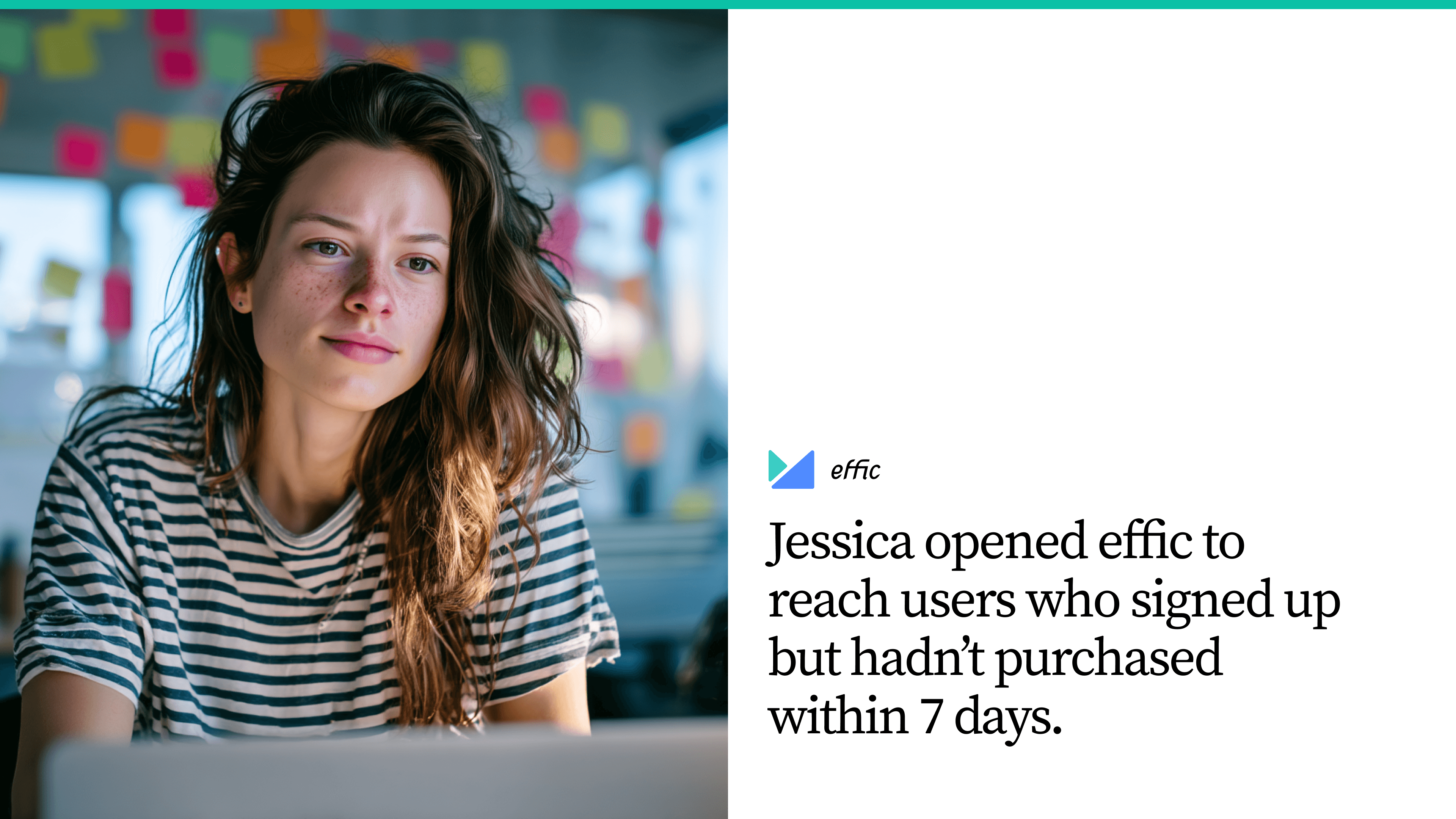
UI walkthrough
Step 1 : Select Recipients
Who should get this message ?
AS-IS
Export data from Google Sheets, then manually filter to find users who signed up but didn’t purchase within 7 days.
TO-BE
In Effic, Jessica selects the “Signup within 7 days” preset and adds the “No purchase” condition — all done in under a minute, no spreadsheet needed.
UI walkthrough
Step 2 : Add filters
Who should we avoid sending this to?
AS-IS
Ask a developer to write SQL to exclude irrelevant users (e.g., those who purchased or canceled).
TO-BE
Jessica applies filters like “Purchase count = 0” or “Signup date within 7 days” with plain-language chips, instantly seeing the user count update live.
UI walkthrough
Step 3 : Write the message
What do we want to say?
AS-IS
Rewrite messages in Notion or email docs, risking outdated templates and formatting errors.
TO-BE
Use a built-in editor with smart variables (e.g., {{first_name}}) and preview mode to personalize and verify messages instantly.
UI walkthrough
Step 4 : Set the timing
When should it go out?
AS-IS
Export user lists to Sendgrid/Braze and schedule separately, often needing dev or PM support.
TO-BE
Jessica sets delivery rule:
1.Immediate → “Send payment confirmation right after checkout.”
2.Delayed → “3 days after purchase, send a review request.”
3.Time-based → “Send billing reminders every 25th.”
UI walkthrough
After launch CRM :
Track performance in real time
AS-IS
Wait days for the data team to pull reports. By the time insights arrived, it was too late to act.
TO-BE
Jessica checks the Conversion Dashboard to see drop-offs from send → sign-up → purchase in real time. She can also download raw data or tweak metrics instantly—no waiting.
Designing effic's ui system
Behind the Scenes: Establishing the Confidence Layer for Complex B2B Tools
Beyond that, as a sole proudct designer, I established Effic’s design language to make hard things feel simple. In the world of clunky B2B tools, our target users wanted something that felt clear, approachable, and genuinely usable, especially for people wearing multiple hats.


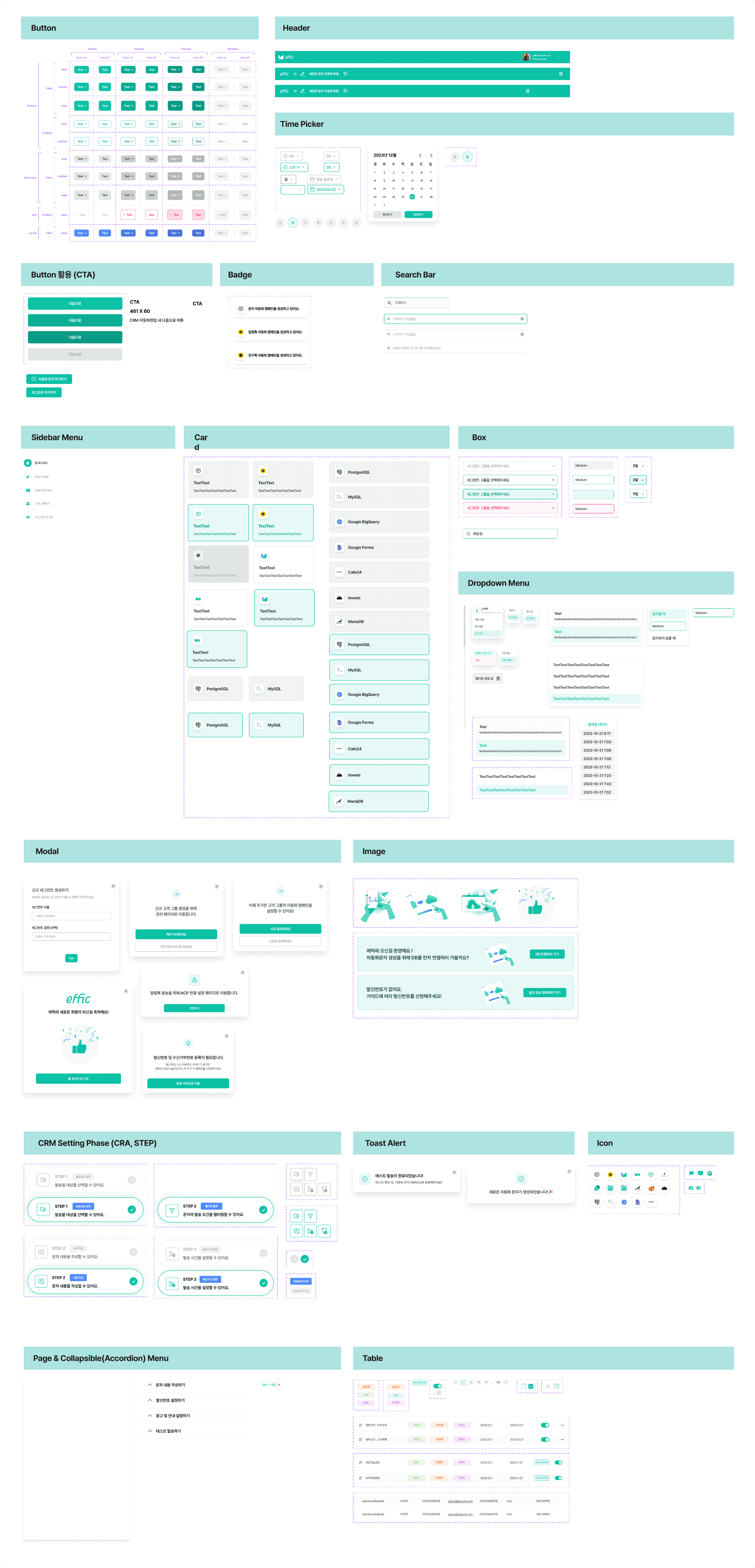
To shape Effic’s overall interface, I developed a cohesive design language through key UI components - gradually building a distinct visual system that made the product feel intuitive, approachable, and uniquely ours.
Testing for real-world use
Validating in the field with our real users.
We ran five test rounds with in-house CRM marketers, using real weekly tasks like re-engagement or segmentation.

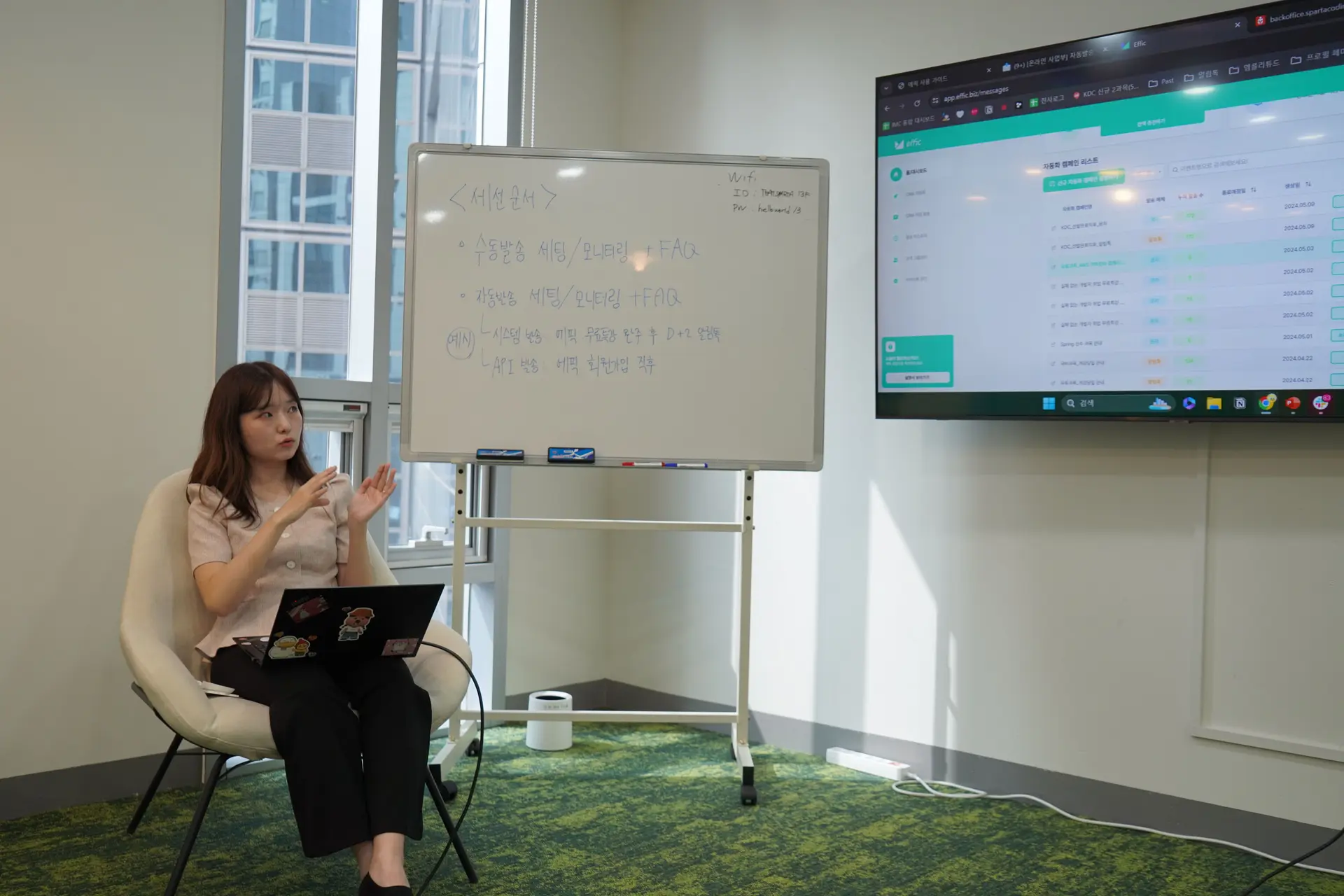
Snapshot: a Project manager using effıc in her workflow
And How did it go? One marketer summed up the impact better than I could:

“The best part was being able to add or adjust CRM campaigns whenever I needed. Before Effiс, even a small copy change meant waiting on developers. Now I can manage conditions and update messages quickly,
it finally feels like I’m in control.”
Nayul Kim, Product Manager(Online team), Team Sparta
This confirmed the design goal: putting control back in marketers’ hands and removing the bottlenecks that slowed them down.
Takeaway
As we conclude, this project taught me…
0→1 requires speed, but defining
the right problem matters more.
Early momentum is critical, but I learned that speed without clarity often leads to wasted cycles. Framing the problem precisely made every decision downstream more effective.
Admit failure early and pivot
using the language of your users.
The turning point came when I stopped defending features and started listening to how marketers themselves described their pain points. Speaking their language unlocked adoption.
Design is not just about aesthetics, but about creating scalable structures that sustain growth.
A polished interface can attract attention, but the real impact comes when the underlying system can flex and scale with the business. That’s where design truly proves its value.
Challenge
The brand wanted imagery that conveyed the artisanal nature of their ceramics while keeping the tone modern and timeless.
Solution
Used diffused natural light and neutral backgrounds to emphasize texture and craftsmanship, creating a series of clean, cohesive images.
Impact
Teams launched campaigns in minutes instead of waiting on engineers.
Adoption grew to 50 plus businesses, launch cycles became 60 percent faster,
and CRM driven revenue increased 6×.
Helping hearing parents connect, Building a gentle learning platform for Deaf children’s families